Fibers

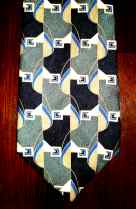
Silk Tie

Silk Tie

Two silk worms were
in a race, however, they ended up in a tie.

I cut a small piece out of the silk tie, and mounted it on a slide.

I cut a small piece out of the silk tie, and mounted it on a slide.

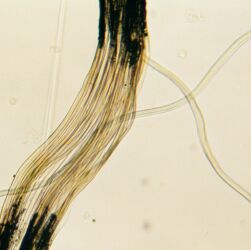
Silk from above tie.  Note the ink, applied to surface of fibers.

Silk from above tie. Note the ink, applied to surface of fibers.

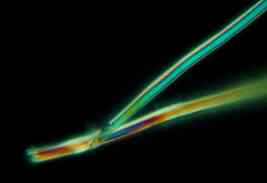
Silk Fibers in section of tie, using polarized light with plastic interference filter.

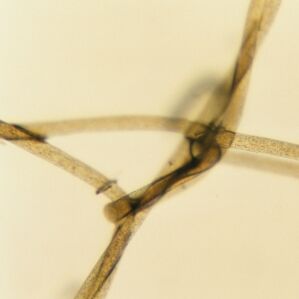
Silk fibers in woven section of the tie above, and separated below. These are the white fibers, photographed in crossed polarization. Magnification approx 100x. Combination of 4 photos using Helicon Focus stacking software.
Mint flavored dental floss.  Small particles of the mint flavoring can be seen.  Magnification approx 70 X.

Mint flavored dental floss. Small particles of the mint flavoring can be seen. Magnification approx 70 X.

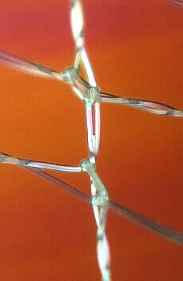
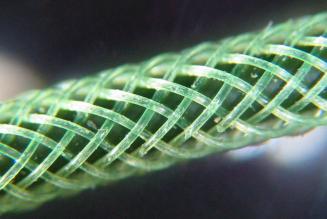
A piece of white nylon mesh in Brightfield lighting.  This knotted pattern can not be seen with the naked eye.  Magnification approx 70 X.

A piece of white nylon mesh in Brightfield lighting. This knotted pattern can not be seen with the naked eye. Magnification approx 70 X.

Same nylon mesh as above, in polarized light.  Magnification approx 28 X.  Background using crossed  polarization with plastic interference plate.

Same nylon mesh as above, in polarized light. Magnification approx 28 X. Background using crossed polarization with plastic interference plate.

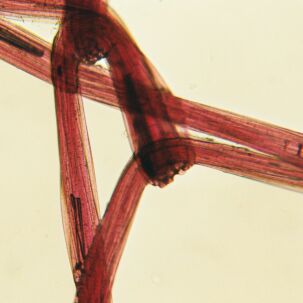
Red nylon mesh.  This is basically the same as the white nylon, however, you can see that the actual nylon fiber is colored.  Knotting structure not visible to the naked eye.  Magnification approx 70 X.

Red nylon mesh. This is basically the same as the white nylon, however, you can see that the actual nylon fiber is colored. Knotting structure not visible to the naked eye. Magnification approx 70 X.

Fiberglass.  Taken from a fiberglass tub-patch repair kit.

Fiberglass. Taken from a fiberglass tub-patch repair kit.  Magnification approx 70 X.

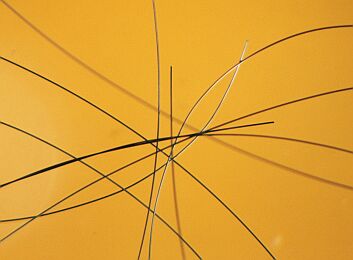
Industrial wire. Approx magnification 28 x.

Industrial wire. Approx magnification 28 x. This wire is .0005 inch in diameter. It is a fine industial wire used in the electronics industry.Shown at  28 X it is about 1/3 the thickness of human hair.  Fiber optic illumination from the top, and Rheinberg yellow center stop below.
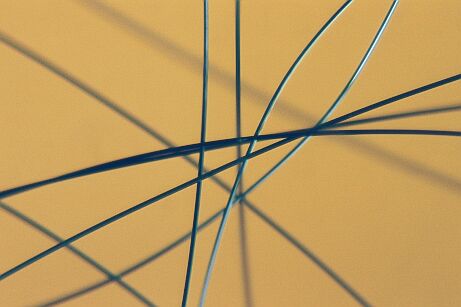
Same wire as above at approx magnification 70 X.

Same wire as above at approx magnification 70 X.

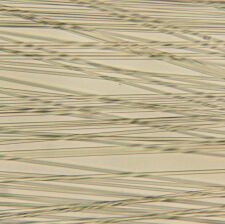
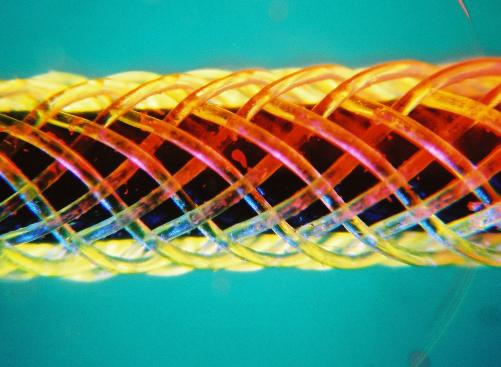
Kevlar.  Magnification approx 70 X.  Used red Rheinberg center stop below, and fiber optic illumination from above.

Kevlar. Magnification approx 70 X. Used red Rheinberg center stop below, and fiber optic illumination from above.

Click here to find
out more about Rheinberg technique

Leaf fiber.

Leaf fiber.  This spring-like fiber was found when a leaf from the Amazon River area was pulled apart. Spring-like fibers seem to hold the leaf's structure in place. Magnification 70 x, using100 x phase contrast center stop for darkfield effect.

Fly fishing  leader

This is a piece of fishing line "leader" used in fly fishing. The magnification is 100 x,and the lighting is from the top, using simple white LED light to show the actual color of the line.


Fly Fishing. leader.

This is the same piece of fishing line "leader" shown above. The magnification is100x, and the lighting, however is using colored LED lights, placed around the specimen, with a teal Rheinberg center stop  filter from below.

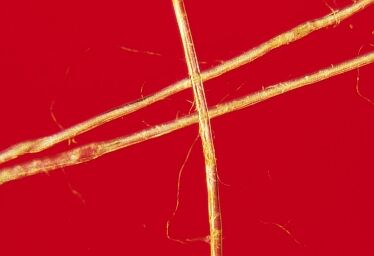
Mummy Cloth. Magnification approx 10 X.

A small piece from what was purported to be cloth from a mummy tomb.  Magnification approx 10 X.  Microscopic analysis determined authenticity.

Mummy Cloth fibers. Magnification approx 25 X.

Mummy Cloth fibers.The above fibers from the purported mummy cloth appear to be flax. This might be consistent with ancient Egyptian burial materials. Photo in crossed polarizers using plastic interference filter for colors. Magnification approx 250 x.


About Mike Shaw

Mike Shaw can be described as a naturalist in the classical sense. His contribution to Science is a by-product of his love for exploring the natural world. Having participated in a chimpanzee rehabilitation project in West Africa, he later travelled to the Amazon to study paper and pulp production as it relates to deforestation. Twice travelling to the observatory at Arecibo, he has done contributing research on their S.E.T.I. project. He is the author of How to Make Rheinberg Filters, for the Hobbyist or Professional. His most recent project has been a comprehensive survey of tardigrade population in the state of New Jersey. Look for a published scientific paper soon.

Leave a Reply

Your email address will not be published. Required fields are marked *

*

You may use these HTML tags and attributes: <a href="" title=""> <abbr title=""> <acronym title=""> <b> <blockquote cite=""> <cite> <code> <del datetime=""> <em> <i> <q cite=""> <strike> <strong>